Math Mentors and Math Games

Early in my graduate education, I took a Lesley University summer school course about teaching mathematics, with a genuine, fresh-from-the-trenches middle school math teacher, Lloyd Beckett. Authentically–and contagiously–he had come to believe in the power of math conversation, and in the rich gifts students with different approaches could offer each other.

Lloyd’s course woke me up as a math teacher and as a mathematician. For years I had assumed that my relatively decent math grades rested completely on my ability to memorize. As it stood, that was largely true. When I did particularly well on one of the New York State Regents exams, my teacher, Augustus Askin, whom I adored, looked at me and said, “How did you do that?” Although I don’t think he suspected me of cheating, he had seen the puzzled look I often wore in math class.

Memorizing was okay for the test, but the effects never lasted very long. Real understanding, for me, required experiences that math class rarely offered–that I couldn’t even imagine math class offering.

On the other hand, in secret, generating that puzzled look, I’d spent years figuring out my own approaches. I could hold onto math concepts, and work with them comfortably, if I experienced them pictorially or concretely, or told stories about them. This was in a time, though, before math manipulatives, at least in my country schools, and before the wonderful math videos I was able to use with my own students, decades later.

There were exceptions. A little girl for whom I babysat had one of those balance toys with numbers weighted to add or subtract properly. If you hung a 5 and a 2 on one side, and a 7 on the other, the balance came to rest with the pointer in the right place to mean yes.

Here’s a sample of a similar balance still on sale.

math Plastic-Bear-Shaped-Digital-Balance

Other, purer versions make more sense for older kids, but I spent a lot of time playing with that balance, savoring it. It was what I needed.

I’m also stubborn, and I hated subtracting. All on my own, with no support from the rote-memory approach in school, I had figured out a way of subtracting by adding, doing a sort of mental algebra: what plus 5 will equal 7? Or what plus 9 will equal 17?

In my earnest little heart, though, I suspected that I was cheating. I thought I was making up for not being good at math.

Years later, when I spoke with parents at math curriculum nights, I sometimes called myself a “born-again mathematician.” Teaching math with new math tools and toys and approaches, and with new respect for many kinds of math minds, I found that I loved math, respected my own math learning style, and got a huge kick out of helping all sorts of kids come to understand new math ideas and feel new math power.

That marked me for life, evidently. In my current pause from teaching, any time a math idea sails into my day, I grin and go with it. So, for any of you who feel math deprived, just through the holiday, or in your everyday life, I offer a few math games.

The first two aren’t really games, just reflexes.

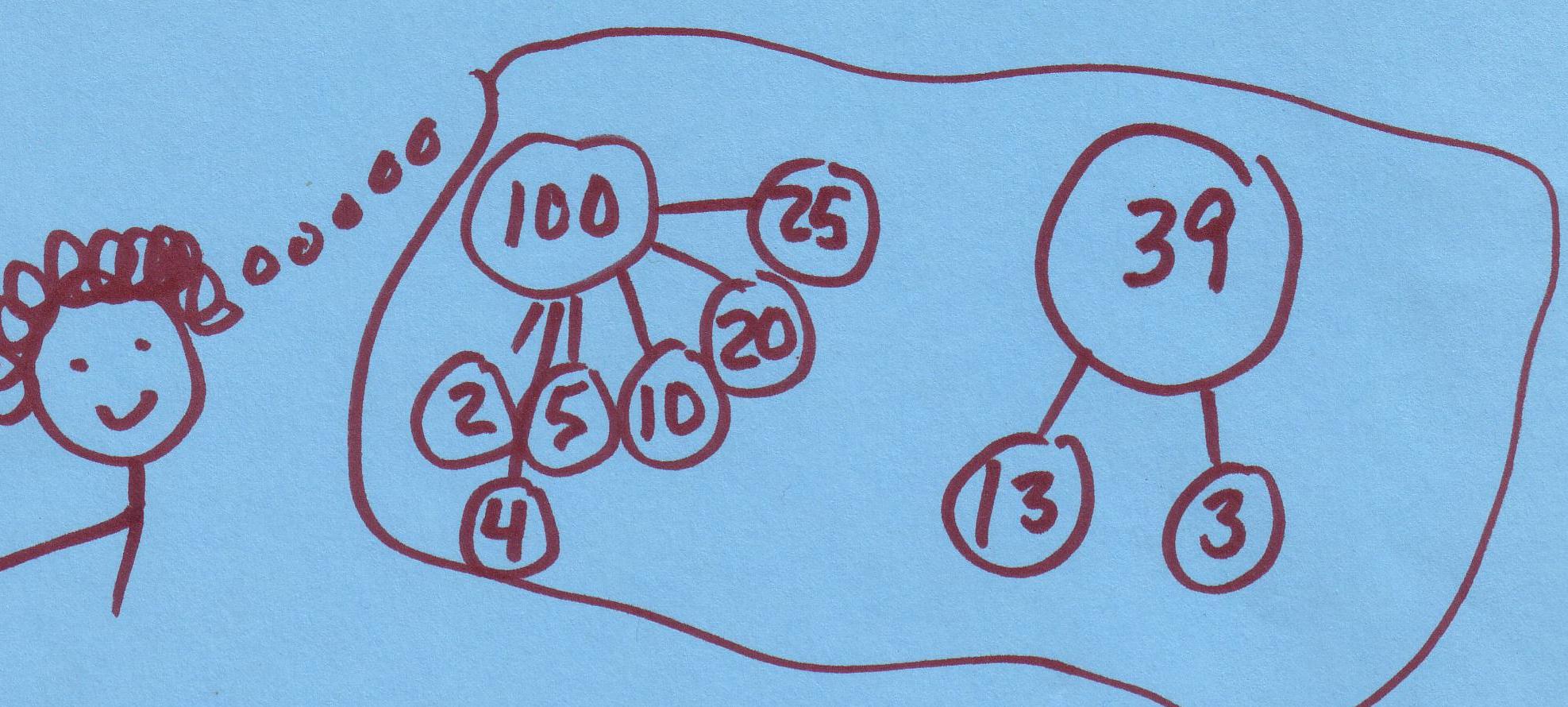
When I tear myself out of whatever book I’m reading, I play with the page number as I walk away. 139. Hmmmm: is that prime? It might be, since none of the proper factors of 100 overlap with the factors of 39…
thinkingabout139 cropped

When someone in our family has a birthday, I figure out the prime factorization of the new age. My father recently turned 92. Let’s see: 2 x 46, or 2 x 2 x 23. Suddenly I feel, inside the 92, an 80 (4×20) and a 12 (4×3). Oooh, cool.

Last year, my daughter’s children were both prime, 3 and 7. As of a few days ago, they are both powers of 2, having turned 4 and 8 (or 2×2, and 2x2x2.) Abe is now twice as old as Julia, and that will never happen again.

What official-sounding thing can we call this? A mathematical storytelling impulse? It works for me.

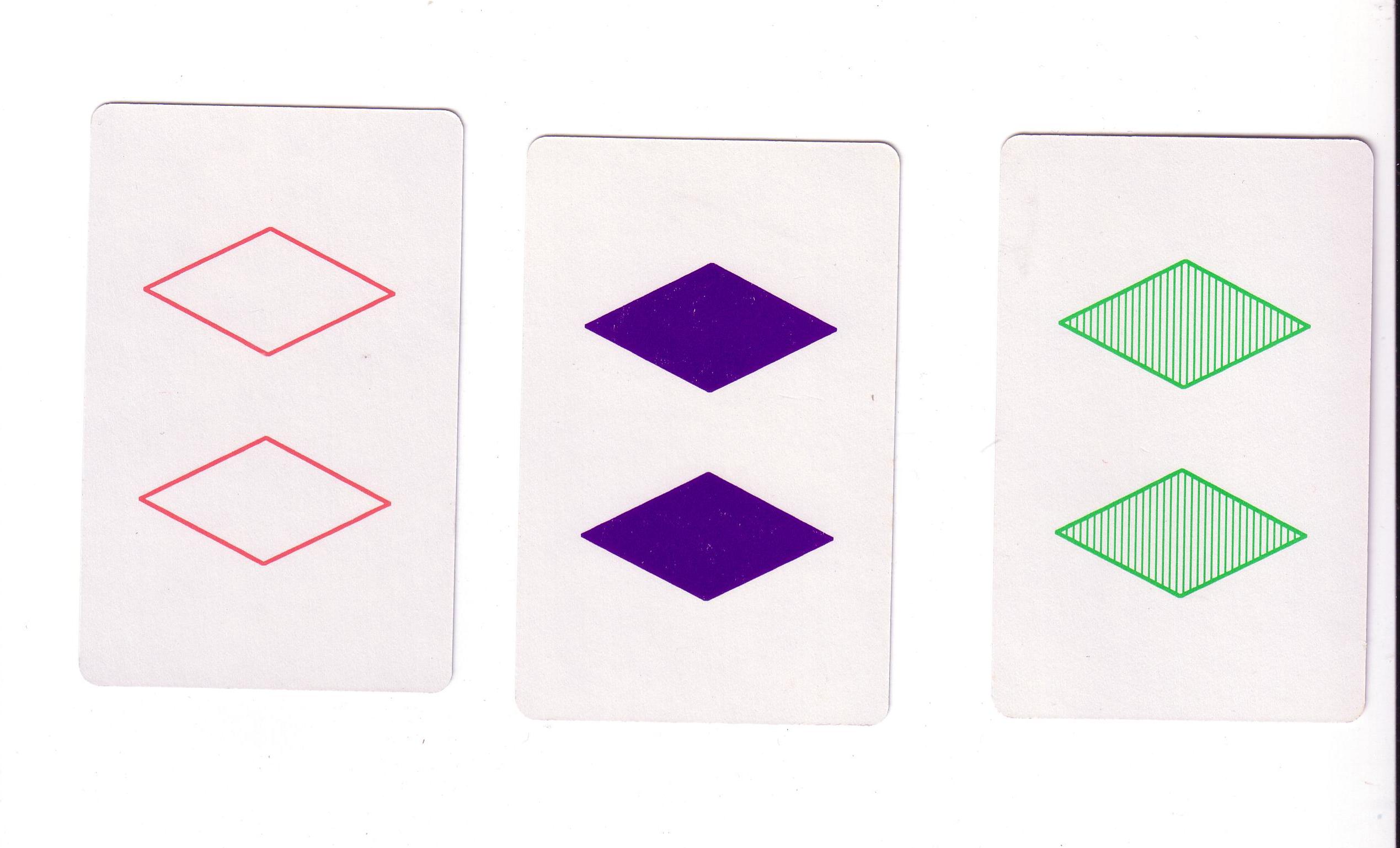
But other things can work, too. I’ll never forget the day my kids and I stopped by Kate Keller’s house for a quick visit, and learned now to play Set, from watching her play it–because she refused to tell us the rules. Obsessed, we came home and made our own version out of file cards. Later on, watching my students play Set was like giving them a diagnostic test. Some kids were quicksilver zippy at Set, and slow at everything else that happened in class. Some kids were slow, as I am, but warmed up as they went along. Clues, clues. And hilarious fun: in math choice times, I had to limit the number of kids who could play Set together, because that corner would get so loud.

This is not a Set:
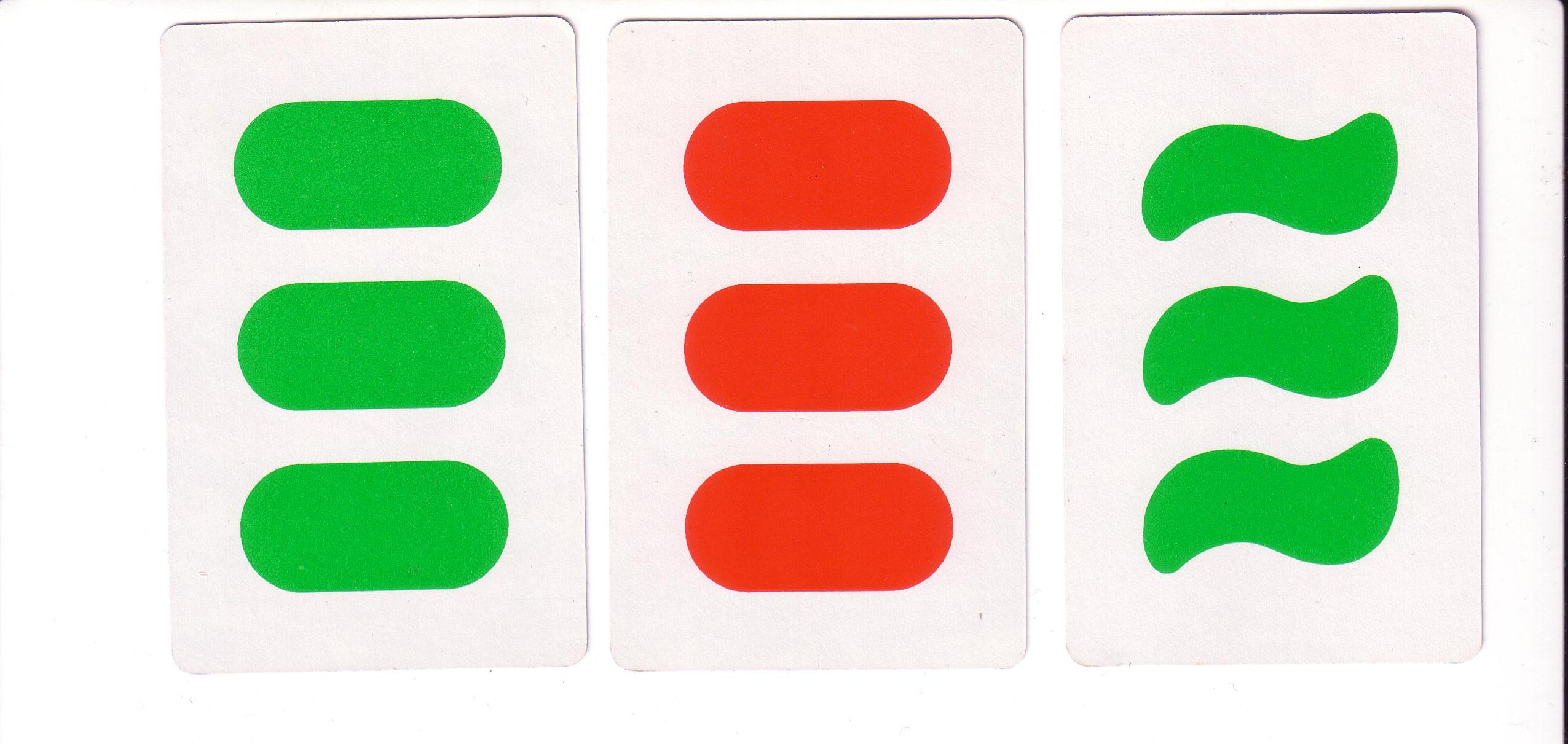
not set aNeither is this:

not set b

But this is:

set c croppedand this is:

set a…and this is a particularly delicious Set:
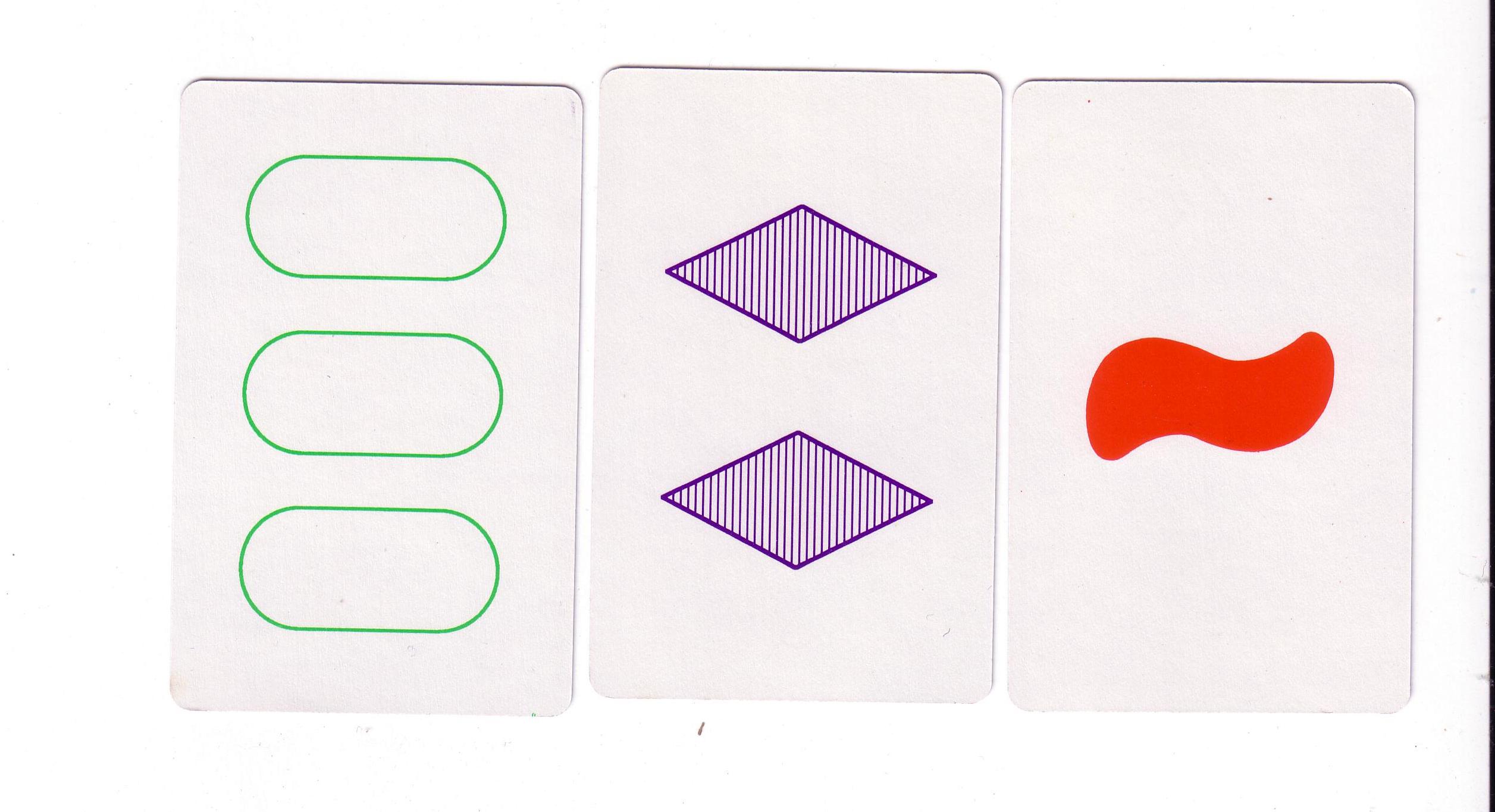
set bTo learn more, you could track down Kate Keller, my all-time-most-important math mentor, who has more fun with math than anyone else I know. She also perceives and nurtures students’ math individuality with something I can only call math compassion, a power almost magical.

Or follow this link to the Set Wikipedia entry; it’s fascinating! There are ways to play Set online now, too–a discovery that could sharply curtail my future productivity.

Finally, Lloyd’s Game. Of course, he probably called it something else. I’ve sometimes imagined Lloyd just up and quitting when one of his best whole class math games no longer worked. 1999 was a great year for this game, but the very next year, 2000, was hopeless.

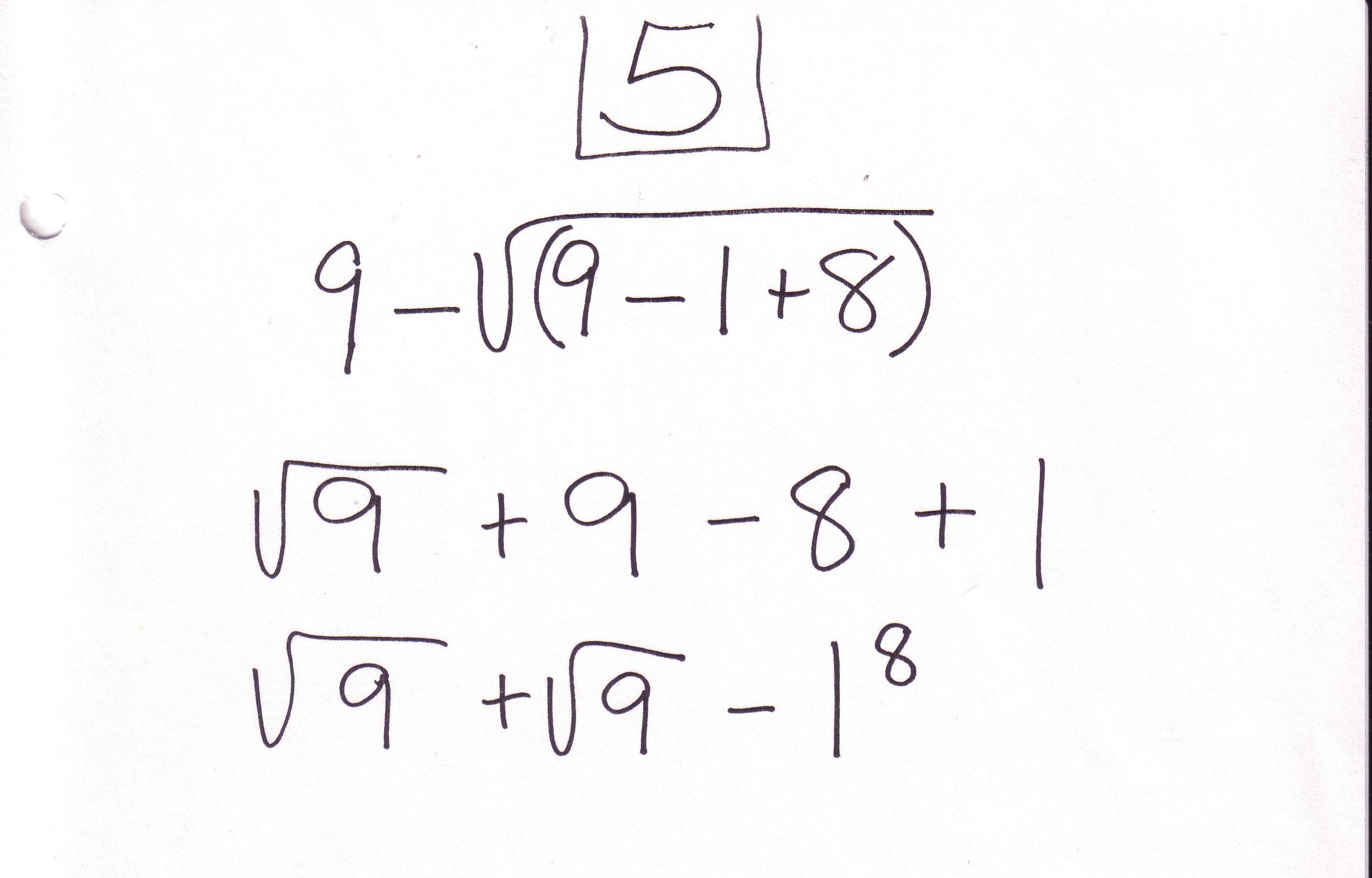
In Lloyd’s Game, you have access only to the digits in the Gregorian calendar’s count for a given year. You combine those with math symbols (no quota on those) to create expressions equaling the numbers from 1 to 100. You must use all four digits in each expression, and you may not use two-digit numbers made from combinations of digits (although I remember resorting to that a few times when nothing else worked.)

Generally, in class, we used the new year’s digits to create the numbers of the days in January, catching up with a burst of activity when we came back from the holiday break or weekends, but mostly targeting each number as it came up, day by day. We used the basic operation symbols, + — × and ÷, along with parentheses, the fraction bar, the square root symbol, and the exclamation point meaning factorial. We were allowed to use a number as an exponent, so 1 to the 9th power was an excellent way to dispose of a superfluous 9.

Here are two examples, using 1989:

Lloydgame27and2 cropped

The best fun came in class, as we compared multiple ways of arriving at the same target number. Gradually, as January progressed, we watched and cheered breakthroughs for kids who had initially feared the game’s challenge.

Here are three ways of making 5, from one of the posters we hung up around the room, again from working with 1989:
LloydGame cropped

After 2000, a flop for obvious reasons, we sometimes used the year in which the largest number of kids in the class had been born. Sometimes I chose numbers relating to our themes: the year Charles Darwin was born, the year the Blackstone Canal was first opened, etc.

Try it out, alone or with some pals. You can use the birth year of your favorite politician—they’re all still creations of that wonderful (for this purpose) century past.

In any case, life is short. Go ahead and feel human. Play with math while you can!

Heels-over-teakettle, and Other Festivities

Today I’m thankful for all my fellow word-lovers, past and present.

I’m thankful for my grandmother, who chatted with everyone she met, and picked up other people’s conversational expressions the way a dog picks up burrs. She kept and passed on treats like enough blue sky for a Dutchman’s britches and one pickle short of a quart. Listening to my mother and my grandmother talk together–with a what in thunder is he celebrating? here, and a heels-over-teakettle there–marked me for life, in the best possible way.

Once again, I’m thankful for George Batchelder, brilliant junior high English teacher, the one who gave us whole class periods for the Times crossword puzzle. He also asked us to list, on a page in our notebooks, plausible but nonexistent words: words with English prefixes and suffixes and blends, that were nonetheless fake, of our own manufacture: beautaceous, recrunk, preventicate, loombipuddle.

I’m thankful for a host of word-crazy students, including Andrew Cozzens, who often leaned over at dismissal to confide his word of the day. Even after he had left my school, he wrote emails telling me wonderful words he had recently discovered, such as loquacious.

I’m grateful for the poets of Every Other Thursday, whose recent poems have included the words moonbeamedcantedphlegmatic, and loris, and the phrase crammed and nuzzling.

I’m everlastingly thankful for Alex Brown, and his children (who are also my children), and for our tendency, when together, to lapse into the synonym game without warning. Why stop with playful, when you can keep right on with lively, exuberanthigh-spirited, festive and frolicsome?

That leads me (inexorably, but also gleefully) to word games. Today I offer just a few, in honor of long car trips to and fro, and in tenderness toward family relationships more amenable to word games than to talk about affairs either local or international.

Warning: there may be a sequel, down the road. In my family, word games were not scarce as hen’s teeth; we were two-thirds wealthy with them. (What?) And then I went on to invent some.

First, my grandmother’s (and mother’s) special rules for Scrabble.

  • You may let a word edge over the boundary of the playing grid, by just one letter, any time you need to, in order to play a particularly satisfying word.
  • If you have the right letter to replace a blank, you may do so, and take possession of the blank, at any time; this doesn’t count as a turn. (My cousin’s wife Terry, during one particularly hilarious game, replaced a blank with a blank, but I can’t remember why, only the way we were reduced to mirthful tears.)
  • At the end of the game, everyone collaborates in an effort to place every last orphan letter on the board, in genuine legal words.

My mother, at 86, still won’t play Scrabble scored, because she wins so reliably that her opponents become discouraged (down-at-the-mouth, or even mad as a wet hen.) Once in a while, we’ll calculate the point value of a word just because it’s so delicious.

All my successive families have played the geography game in the car. My class used to play it when lining up for gym or dismissal.

  • The first player names a place: a town, a country, a street, a river, a mountain–anything that could be on an ordinary map. Let’s say Merrimack River.
  • The second player ignores parts of the name like River, focuses on the last letter, and comes up with a place name that begins with that letter. Given a K, the average person will say Kansas, but you can be playful–that’s the point, right?–and say Kalamazoo. I always try to, unless someone else has used it already in that game.
  • Small children may name a place somebody else has already used, if they need to, and anyone may have help with the spelling of tricky place names with ph making the f sound, like Phoenix, or endings that sound like ee but are actually spelled with a y. Etc. Our language, including our geographic language, is full of these opportunities, but adults should go easy on the pedanticism. (No, you won’t find it. It’s in the category of plausible but manufactured.)
  • You’ll want a good supply of place names that start with y, such as Ypsilanti.
  • Do not be alarmed if your game drifts into the dreaded A-swamp: America / Australia / Andalusia / Africa…  My class once made it through the entire line (becoming slightly late for dismissal in the process) using place names that begin and end with A. Like many hardships, the A-swamp arose there in our geography to test your indomitable spirit.
  • In the days of smart phones, it’s easy to resolve arguments about spelling. In my family of origin, I was definitely not the final authority, having the spelling memory of a flea, or maybe a rock.

Speaking of spell-checkers, you can play a solitaire word game by typing in the names of your friends and seeing what the spell-checker makes of them. Or follow the eight-year-old Colby Brown’s example: randomly type a paragraph entirely in gibberish; then let the spell-checker do its best; then write an actual paragraph around whatever words the spell-checker has found.

Last, for now, here’s a game that requires either a dictionary or, if there are no dictionaries available, a referee. It’s called the Syllable Game, and this one I invented.

  • We played this game many times beginning with the word Touchstone, the name of our school. Compound words generally work well, but the rules just require words of at least two syllables to start, and for every turn. In fact, you’re better off beginning with a word of three or four syllables. In class, this was often a word central to our current study. So, for example, transportation, or, for the purposes of the game, trans / por / ta / tion.
  • The second player comes up with a word that preserves one of the syllables of the first word. This is where you need the dictionary, to check the official syllabication of the word, which will often contradict your first impression. (On the other hand, there is nothing like a car full of people carefully enunciating the word metamorphosis to judge its syllabication. Just designate a syllabication referee as well as a driver, and you’ll be fine.)
  • In class, students were absolutely required to use a dictionary, which gave them great practice, exposed them to related words, and could lead to all sorts of pleasant detours.
  • The pronunciation doesn’t have to be preserved, but the spelling has to be preserved exactly. So trans / late or por / tion or im / por / tant could all work as second turns, but port / man / teau or tran / scribe could not, because the por has been changed to port, and the trans has been changed to tran.
  • Let’s say that the second player decides on trans / at / lan / tic. In a two-player game, the first player now jumps forward from that word, with all sorts of lovely possibilities: lan / guage or fan / tas / tic or at / ten / tion. Etc.
  • The syllable you’re preserving can show up anywhere in the new word, jumping from second syllable to first, or third to first–so long as it’s the exact same syllable spelled the same way.

Assigning this as homework, I asked students to play with a parent or older sibling, and to record the whole ladder of turns, showing syllable breaks. Parents notoriously resisted using a dictionary, but came up with wonderful words.

syllable gameFinally, for whole class play, to help the game move faster, I invented a variation called The Syllable Web Game, which we played on the spare white board at the front of the room. Any syllable on the board was available to  any player, even if it had already been re-used. (In the illustration, you can see how the ce from cement was reused in celesta, and then in celestial and cerulean and something I can’t read in the photograph.)

Usually we played this game during morning sketching time; sometimes also writing time and silent reading time. Players showed the syllabication and initialed their words, and then explained their meanings in the class debrief.

So now I bow, gratefully, to all the sources and innovators and playful practitioners of the language we share. It’s a very full room, and you’re all in it!

syllable Touchstone

Using Picture Books with Big Kids

Lately I’ve been trying to imagine my sixth-grade teacher, Mrs. Tuthill, reading a picture book in class, or letting any of us read one. Within the school day, I can’t remember being encouraged to read anything but textbooks. (I was lucky, though; I had a much younger sister to read to at home, and my mother was well on her way to becoming a children’s librarian.)

The people who taught my daughter and son in middle school, good and competent teachers, never used picture books, to my knowledge.

Right now, this minute, most teachers face intense pressure to demonstrate rigor and grade-level competence. I would be thrilled to hear about a sixth-grade teacher in my town, using picture books or urging students to include them in their own reading. I know it’s improbable.

On the other hand, the teachers who taught me how to teach, and the colleagues who challenged and nurtured my teaching spirit, all used picture books in inspired ways. I can’t imagine the life of each class community in which I was honored to work and breathe, without picture books.

It’s amazing what is controversial in this world.

Time of Wonder crop aSusan Doty and I were setting up our classrooms, chatting now and then. She said, “I think I’ll start the year with Time of Wonder,” a Robert McCloskey book I didn’t know yet. It seemed like a sweeter book than I would usually choose for my cool and savvy 11 and 12-year-olds.

Still, I liked it, and tried it out on them.  As I read aloud, the room grew quieter and quieter. I could gauge the attention of many of my listeners by their faces; could tell others were with me when they grinned at the book’s very subtle humor.

Like all the best picture books, Time of Wonder is powerful and efficient. Reading Time of Wonder together, my class and I shared summer, and summer adventures, and the inevitable ending of summer. We shared what it’s like to listen to adults talking about possible trouble, a hurricane coming. We shared what it’s like to sit with your grown-ups and sing through the storm, and wake up the next day to explore the branches and roots of a fallen tree.

A good picture book, like a poem, and like so much of our everyday storytelling for each other, means more than one thing by everything it means.

We talked about students’ experiences of a recent hurricane. The book had given us permission to admit to having been frightened–if we were–along with a model of opportunities for discovery everywhere–and we had had those, too.

Recently I appealed to past students on Facebook. What picture books stood out for them? Taylor Davis responded almost immediately, “The one about the red canoe… something about a boy and his aunt…I remember falling in love with it!”

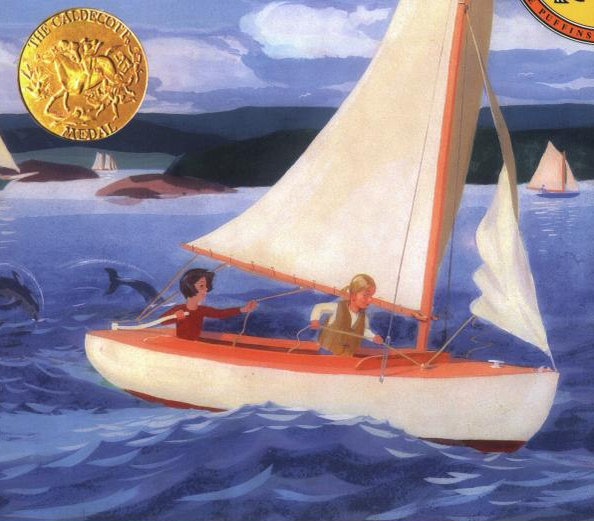
Three DaysTwo kids, two women who are sisters, a wonderful adventure with danger and glory, and a cat named Sixtoes waiting back at home for an offering of fish.

Some years I used “the red canoe book” as read-aloud to start the year, especially if we were going to be studying watersheds (or map reading, since they use maps to plan their trip.)

Some years, though, the canoe book waited with others to be chosen by individual students, out of a crate full of books brought from home, from my family’s picture book collection. That crate supplemented the classroom’s shelf of picture books, and another bin of books borrowed from the school library, and another from the public library. All together, kids could choose from an enriched and enlarged collection, in the two or three weeks at the start of the year when everyone read picture books during silent reading time.

That happened by my decree, a rare state of affairs which always met with some initial resistance. At home, for their official homework reading time (and, of course, in any additional time they spent curled in a tree or a favorite chair, or walking around a safe path in an open room) they could read the big thick fantasy novels in which they were immersed. In school, though, for those first few weeks, I needed to watch them choose, begin, read, finish, and pass along book after book after book.

go dog go p d eastmanIt’s true that I felt grave concern about a real and present danger: without my intervention, students might get to adulthood never having read highlights of English literature such as Go, Dog. Go! by P. D. Eastman–or never having read them with their new-found, big-kid powers of observation, and sense of irony.

We needed picture books to help us take ourselves less seriously. We also needed picture books to help us take ourselves more seriously, to take us on an express trip into important questions about life and the world.

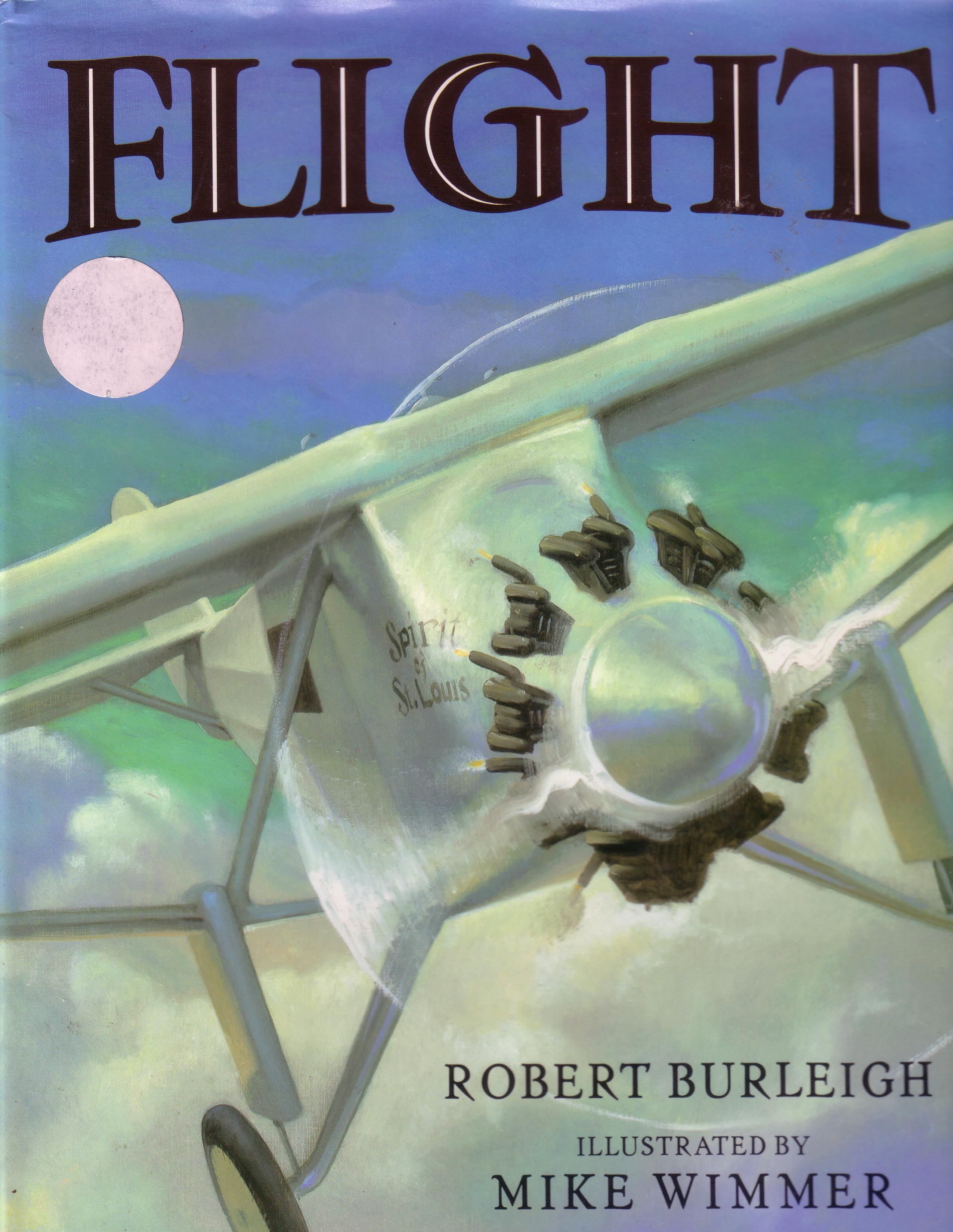
Jessica Unger, responding to my Facebook invitation, remembered Flight, in which the young Charles Lindbergh struggles to stay awake on his trans-Atlantic voyage. (In other words, in which the perils of lost focus or failing attention could be lethal.)

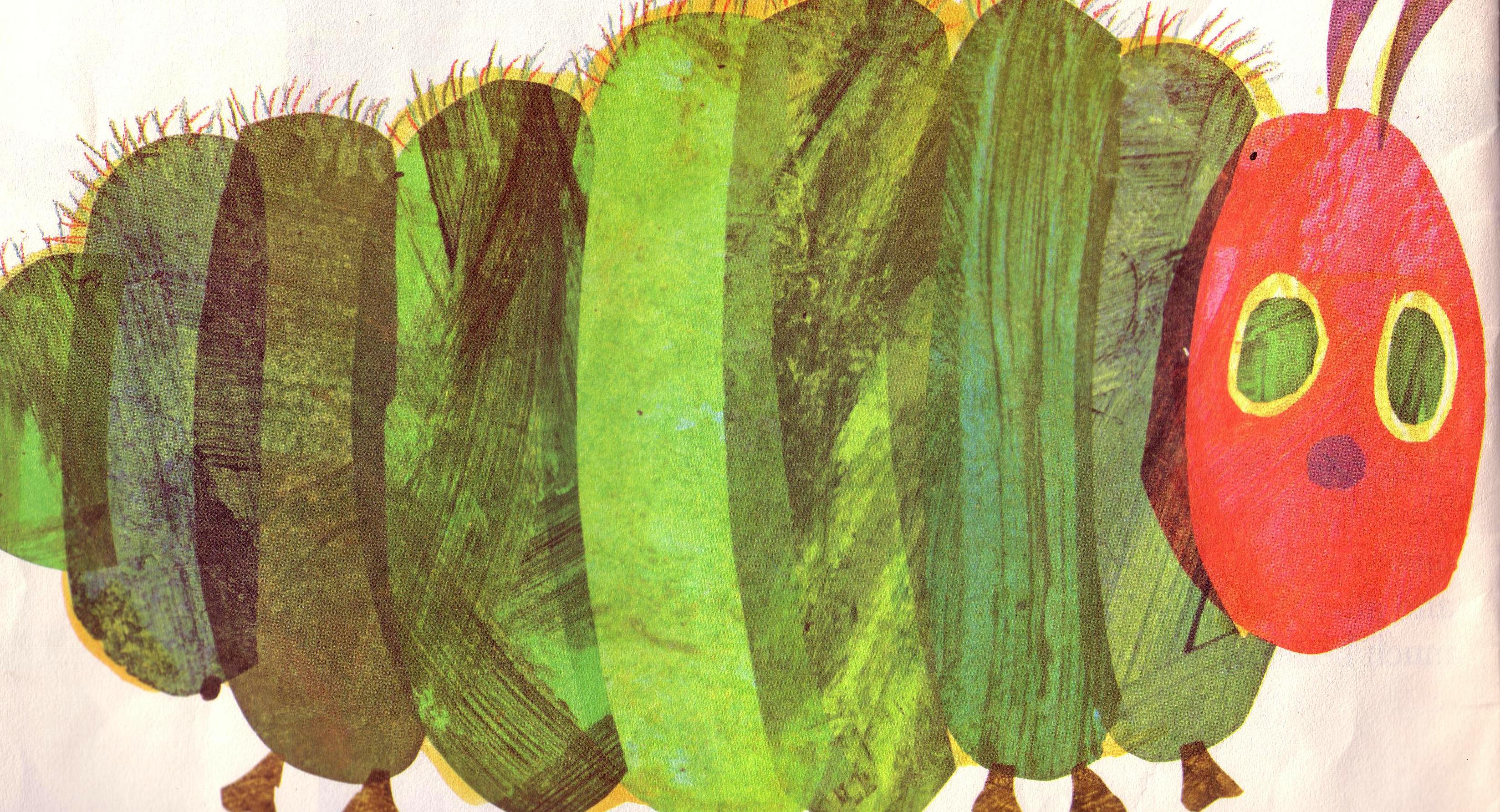
Flightt Robert BurleighSeveral past students remembered Eric Carle’s Very Hungry Caterpillar, in which eating and eating, and growing and growing, result in transformation.

Very Hungry Caterpillar Eric Carle cropped

galileo croppedUltimately, picture book season in September worked out well for everyone in the class, partly because many of the books I had gathered were what is known in the trade as “sophisticated picture books”, books definitely intended for somewhat older audiences.

Here’s one of many wonderful picture book biographies. This one, by Peter Sis, doesn’t dodge the horror of Galileo’s being put on trial for his life, for saying what he could see.

Non-fiction picture books could work well later in the year, too. If a group of students were exploring a topic together, reporting to each other on separate individual readings, the right picture book could enable a strong contribution even from a reader still overwhelmed by long blocks of text.

After the first couple weeks, for their individual reading, and for the read-aloud books we shared, the students and I mostly chose novels. I might suggest time with picture books for a student who had left her book at home, or a kid marking time until the next book in his series came out on Wednesday.

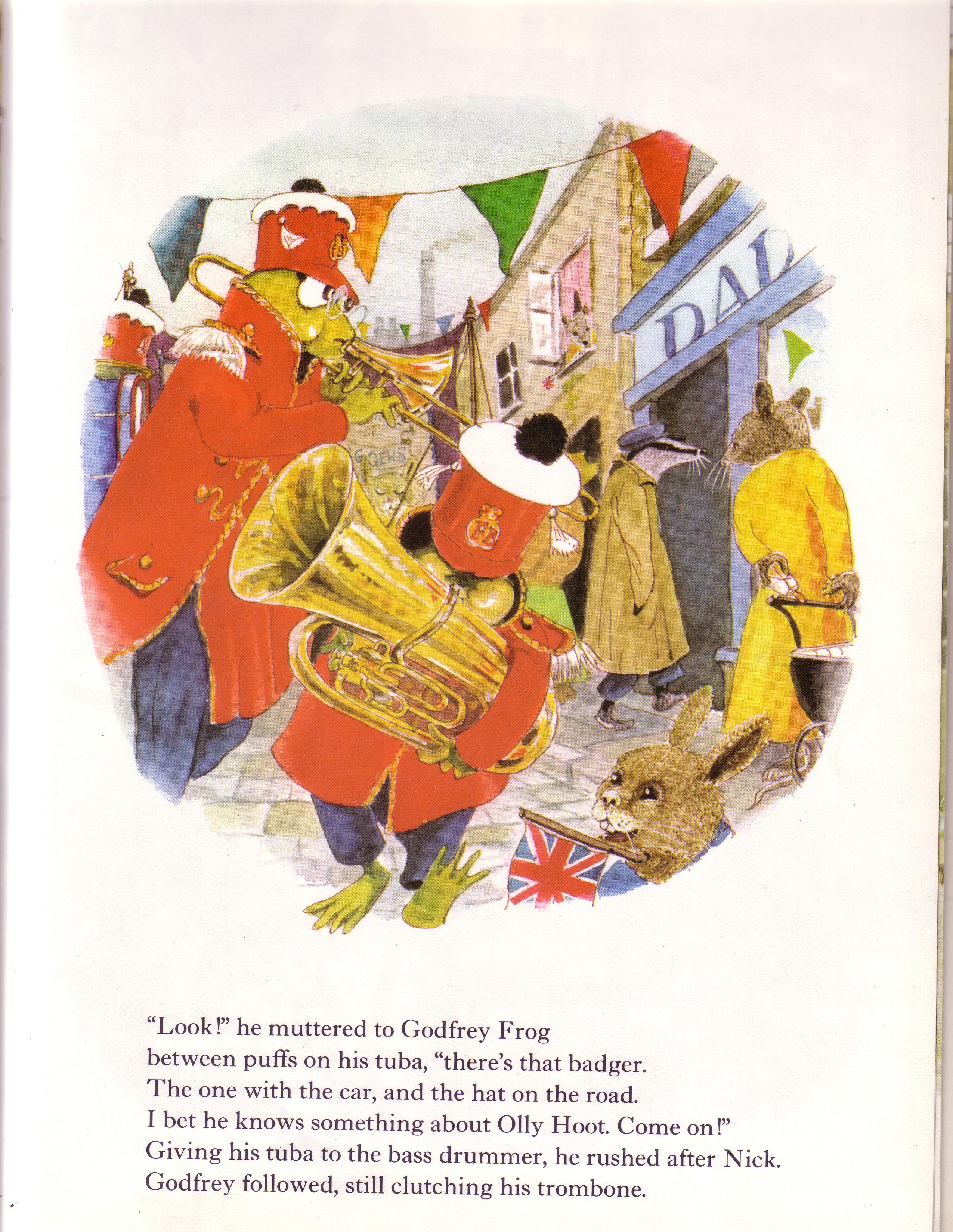
Frog Band and Owlnapper Jim SmitSometimes this detour back into picture books would become extended, as a student tracked down all the available picture books by a particular author, or discovered a wacky series that satisfied a taste for British humor, juvenile grade, like this one. (This is a page from The Frog Band and the Owlnapper, by Jim Smith.)

Often, also, a picture book or two could launch a new thematic study–launch in the sense of full throttle forward.

Henry Hikes to Fitchburg D.B. JoFor example, Henry the bear (Henry David Thoreau just barely in disguise) makes a case for his preferred mode of transportation–and a bet with a friend–to prove that hiking to Fitchburg takes no longer than working to pay for train fare.

rows and piles of coins

Henry’s argument with his friend opened a thematic study called Transportation Choices. Other picture books helped us think about people with limited access to choice: people in our own world unable to drive due to disabilities or aging–or youth; people in places where a bicycle can change a family’s possibilities. In My Rows and Piles of Coins, by Tololwa M. Mollel, a young boy wants a bicycle not just to ride, but to serve as a mechanical pack animal, getting farm products to market.

The right picture book could widen–powerfully, effectively, almost magically–our sense of “us.”

Miss Bridie straightenedBefore my school opened an older student program, all my 12-year-olds graduated from our school and became immigrants into the cultures of other schools. Immigration made a particularly strong thematic study topic then, and picture books helped focus on the choices made by immigrants, including what they chose to bring–which could mean how they chose to be prepared. Miss Bridie Chose a Shovel follows Miss Bridie across the sea, and then through her life in her new land, where she uses her shovel to plant, to clean up after a fire, to dig a grave. Here she is, walking away without looking back, setting out into her new life with her shovel in hand.

There are so many other wonderful picture books I’m sad to leave out. My Place, an amazing book from Australia, which I read aloud almost every year, I’m saving for its own special post. The picture books we used to explore ideas about evolution, ditto.

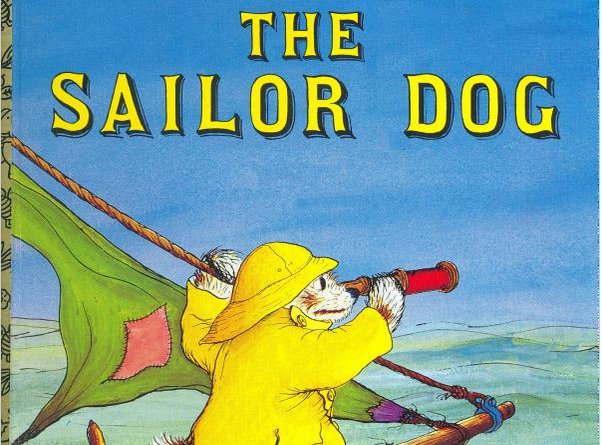
sailor dogFor now, just one more. Almost always, on the last day of school, I read aloud this book. If you were ever in my class, you may remember how we created instant background music for certain pages. Singing the final song, to the tune of Popeye the Sailor Man, was a great antidote for any tendency to get weepy, especially my own.

According to my daughter, I’ve given at least three copies of Sailor Dog to her children, Abe and Julia. “That’s okay,” she says. “It’s good to have one on every floor of the house.”

Some notes:

The round shapes visible on many of the books shown aren’t part of the illustrations. They’re just stickers that marked the books belonging to the classroom collection, or my family collection.

I want to give you publisher information here, in gratitude to the people who keep these books in print. Some are in fact out of print, and harder to find, but I’ve discovered that I can often locate used copies of old favorites through web sellers. So here’s the list:

Time of Wonder, written and illustrated by Robert McCloskey. Puffin.

Three Days on a River with a Red Canoe,  written and illustrated by Vera B. Williams. Greenwillow.

Go, Dog. Go! written and illustrated by P. D. Eastman. Random House.

Flight, by Robert Burleigh, illustrated by Mike Wimmer. Puffin.

A Very Hungry Caterpillar, written and illustrated by Eric Carle. Philomel.

Starry Messenger: Galileo Galilei, created and illustrated by Peter Sis. Square Fish.

The Frog Band and the Owlnapper, written and illustrated by Jim Smith. Little Brown.

Henry Hikes to Fitchburg, written and illustrated by D. B. Johnson. Houghton Mifflin Harcourt.

My Rows and PIles of Coins, by Tololwa M. Mollel, illustrated by E. B. Lewis. Clarion.

Miss Bridie Chose a Shovel, by Leslie Connor, illustrated by Mary Azarian. Houghton Mifflin Harcourt.

Sailor Dog, by Margaret Wise Brown, illustrated by Garth Williams. Golden Books.

Progress Report

My most recent post was the fifteenth on this blog. That felt to me like time to think over my “time to think it over,” and as usual I did that by watching mental videos: my newest grandson, the river of students I’ve taught, and myself, as blogger.

 Zen Meditation

During the months in which I’ve been writing these posts, and figuring out what comes next in my life, I’ve also spent a happy amount of time with Zen, who is about to be four months old.

Lately, I’ve been inspired by watching him discover his hands, which are very small.

hands lightened upAt first, when Zen was set down on one of those mats with soft bright toys suspended on long crossing wands, he waved his arms and legs with huge pleasure, but not much control. When one of his wild waves connected, his eyes opened wide, and he made a reflective comment in Zen language. Increasingly, he tried to bat those toys around his small heaven.

hands and crittersOnce he developed a little more control, he would hold his right fist at the length of his outstretched arm, intently focusing. He seemed to be figuring out that since he could use that hand, it must belong to him. I thought—and said, since he’s incredibly easy to talk to, and doesn’t yet roll his eyes when I come out with teacher talk: Yes, it’s amazing! We have these perfect tools built in!

I watched Zen work consciously, painstakingly, to practice opening his hand, before closing it on something he wanted to grasp. He got hold of my sleeve as I was changing his diaper, and I laughed. His look was a combination of who, me? and yes, I’m cool.

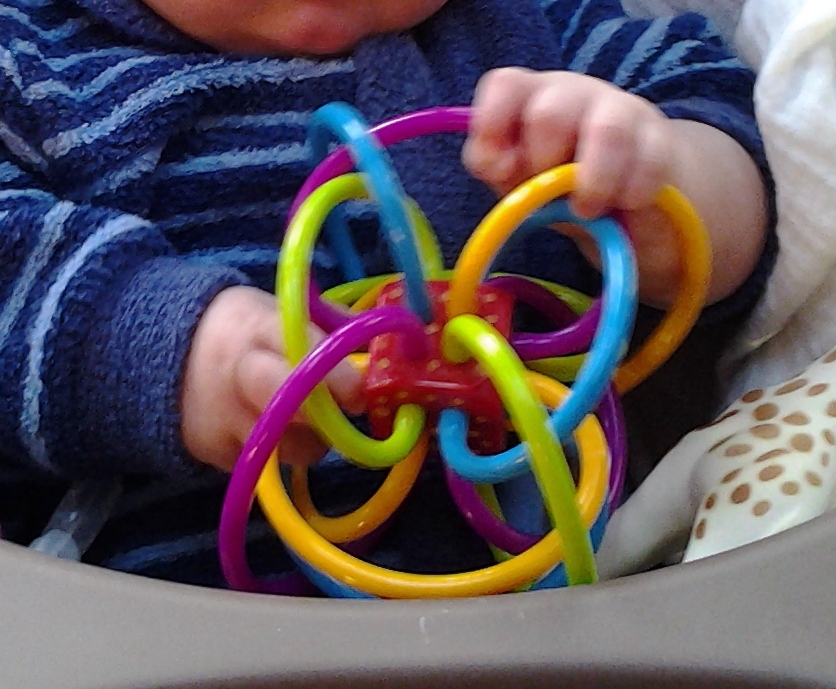
Now, sitting in his swing, Zen can grasp his favorite model of the cosmos in both hands.

hands and cosmos 2When he’s lying on the play mat, he has all sorts of ambidextrous fun. His left hand plays the crackly wings of the parrot; his right hand tickles a couple of giraffe feet. One evening his parents watched him manage to include the monkey, a three-ring circus. Yesterday, he pulled so hard on all these fabric friends, trying to get them into his mouth, that the entire superstructure seemed to be undergoing an earthquake, with crackly-parrot-wing sound effects. Total mayhem! Produced by a four-month-old! Whoever designs these baby toys is doing a great job.

A river of students

So that’s Zen, learning up a storm. Meanwhile, back in my own part of the state, I’m still sorting through the evidence of my past students.

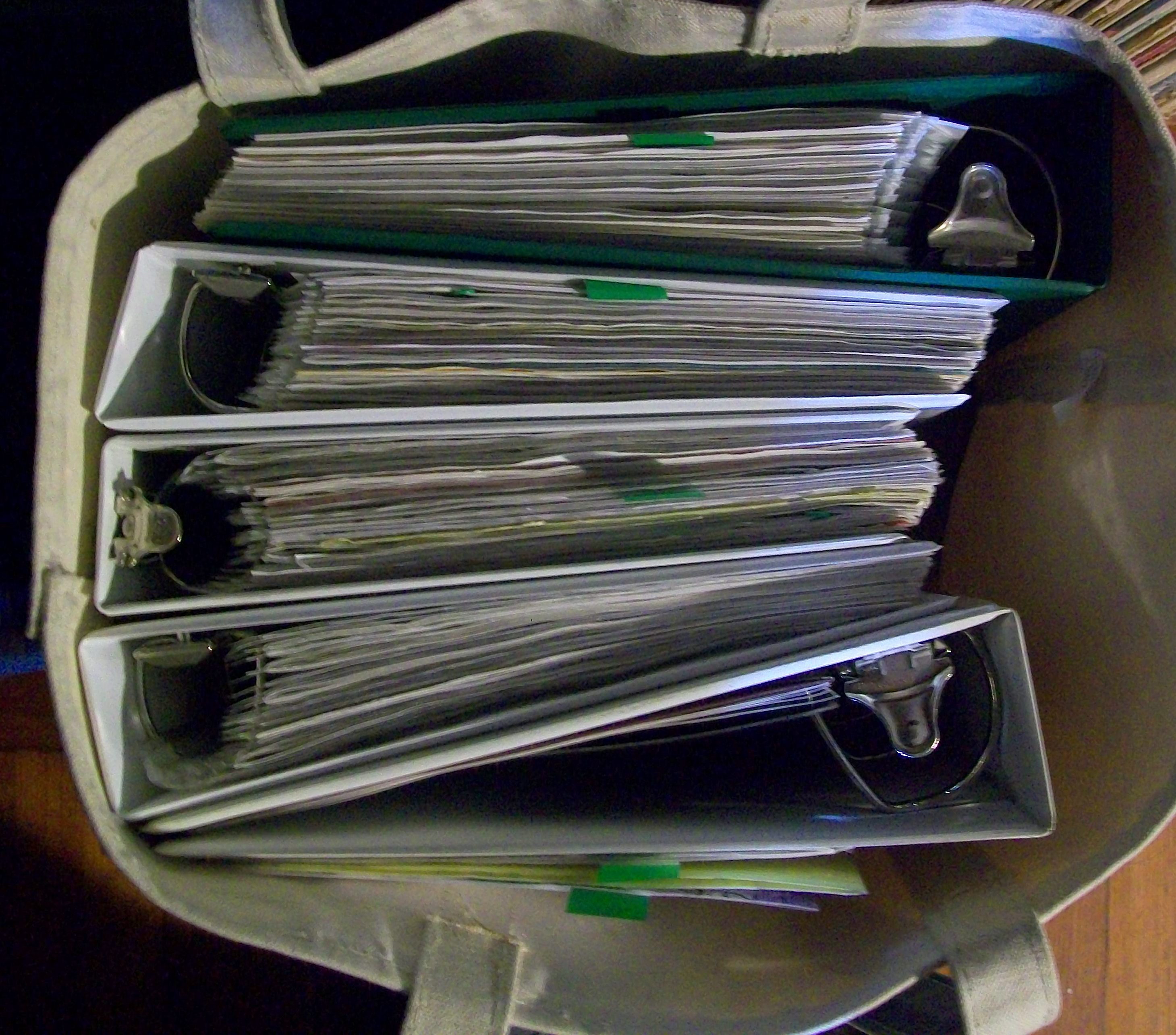
binders in bagI’ve reduced a large number of boxes full of records and work samples–I won’t tell how many–to four binders, with one clear plastic sleeve for each student, all in alphabetical order: three Aarons, so far; five Bens. Etc. I’m maybe half done with that part of the overall job I’ve set myself.

Meanwhile, in my mind, for those past students who are grown to adulthood, I’m holding those layers of evidence next to who they’ve turned out to be. They travel through Nepal; they figure out the evolutionary history of squirrels; they teach kindergarten, or help middle-school city kids make videos, or become involved in their kids’ preschools; they solve problems for internet start-ups; they help cities plan evacuation routes or plant trees; they run campus businesses and theater productions; they move expensive paintings–Picasso!–from one city to another; they tackle contact improvisation classes in Italy. I love it all, and keep finding out more.

What about my more recent students? I’ve just been to the Halloween parade and community meeting, with its traditional skits. Those kids, too, when I look back and forth, now / then, have simultaneously changed and stayed the same–the same unique and vivid selves, learning learning learning.

So I’ve stepped back from the day-to-day teaching of one group of students, who tended to absorb almost all my waking energy, to look at the flow of students through all these years, like a river. Thanks to my inability to throw things away, it’s a river that shimmers with detail.

Watching myself as blogger

Writing this blog, focusing on one small chosen view after another in the landscape of school life as I have been lucky to know it, I’ve been moved again and again by the sheer power of human learning—not just at the early adolescent ages I taught, but in the strength and stretch and increasing individualization of every year that comes after.

In addition, writing this blog is a lot like watching an infant. In fact, I am the four-month-old, and way slower than Zen. But persistent.

I started working on the blog just about when he was born, at the beginning of July. I had five posts at least partly written before I took any of them public. (There are familiar patterns here. I learned to walk by holding onto the furniture for quite a while.)

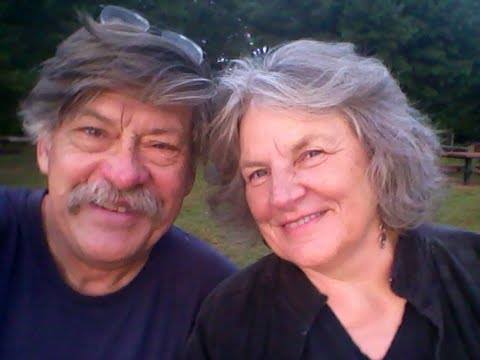
codgers smilingFiguring out how to add photographs as illustrations took me days. No–I’m still getting the hang of it, so call that months. Figuring out how to scan Justin McCarthy’s hummanacraft design took over a week, even with the help of my perennial backstage helper and cheerleader, the wonderful wizard with the mustache, Alex Brown.

So far, writing has been easier than I feared it might be, because I already knew, most days, how to take risks and have fun in a first draft, how to let it lead me, and then how to throw out whatever didn’t work for me or couldn’t fit. I already knew how to revise and revise and revise. (My record, so far, is 23 separately saved drafts.) I love all the second and sixth and nineteenth chances of revision. I’d rather exercise that particular freedom than eat, or get up to put on another layer of fleece when the house cools down.

On the other hand, I still go into a steep decline immediately after hitting the publish button. Every time. Obviously, somehow I’ve felt like I had honed each paragraph as long and as well as I could in a mortal world, when I get to that point. But I hit that publish button and suddenly I’m convinced it’s all hogwash.

This isn’t just about the blog, and isn’t new. John Hodgen once described Polly Brown, poet, being extracted from a street mailbox by public safety officials using the jaws of life.

I am really good at second thoughts. On the other hand, I keep risking it all again.

This past week, I wrote to Alex Dunn. His blogs, at thedailybirdnewengland.blogspot.com and at mooglegaps.blogspot.com, have given me important inspiration. In each of his blogs, Alex is building up a body of perspective on some aspect of the world, piece by piece. He believes in the details, the tiny things that make each type of bird distinctive, and in the overall perspective. Like me, he’s obsessed with maps, which offer ways to view both.

In his return email, Alex thanked me for letting him know he’d had an impact. He said, ‟It is a strange thing sending writing out into the void and never really knowing what comes of it.” Yes. Like sending out poems, and feeling like they might as well have gone to Mars. It’s never been likely that someone would stop me in the drugstore and say, “Here’s what your poem (or your post) made me think about…”

But that’s what I want to know about each of these posts: Not is it good or bad? But what did it make you think about? So I’ve loved the comments some of you have written—adding your own memories of Dana’s death, or your own experience of a watershed far away from me, or your experience with teaching.

On the other hand, some of the blog’s regular readers (I’m pretty sure I can count at least five) say that you’re not sure how to comment. I can’t figure out how to control whether there’s a comment box showing, where I want it, at the bottom of every post. Sometimes, it seems, you have to click on the little blue dialog icon up near the title.

Should I say that at the end of every post? Should I keep giving people prompts for ways they might jump in? Should I just tell you, here and now, that I am most interested in what resonates, in your own story, whatever my story made you think of? Just a few of my current questions.

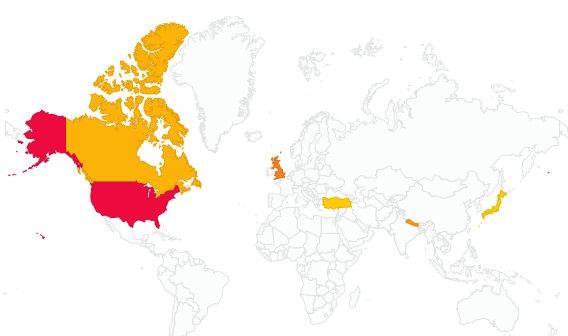
Although some of my nearest and dearest supporters think it’s a mistake, I do check the stats and maps available behind the scenes. I had a private cheering moment when I passed the landmark of 1000 views.

blog hits mapDiscovering I’d had a hit from someone going online in Nepal—and guessing who it was!—absolutely made my day. My week!

I try to ignore the intimidating statistics on other blogs, in the thousands every day. Is that what I want?

Right now, the most personal success–again, so much like writing poems–comes with this: putting life in words helps me cherish it. I am cherishing that life I led as a teacher, and everyone who led it with me. I’m glad that many of my readers are people who shared that with me, directly or indirectly, near or far. I feel, often, like I’m writing, and celebrating, on behalf of us all.

I do have wider, more public intentions, also, and hope to have a gradually increasing public audience. Mostly, I want to encourage people to think about authentic learning, because it’s endangered in the world around us. In some small way, I want to contribute to collective, sensible, committed mindfulness about what learning really looks like and means and needs and produces, so different from the loudest mainstream trends. I want to do that without arguing, actually, just by showing what can work, because I know it has.

So—in sum, as my attorney daughter would say—I am very glad, these days, to have the freedom to drive out the turnpike, across all those rivers, and spend some hours with Zen. Grateful that my older grandchildren are only a day’s train ride away. Grateful for more phone and email contact with the rest of my far-flung family. All of us are learning, moving from one version of ourselves to another, and I’m paying better attention now.

I’m also more aware than ever before that I was lucky-and-a-half to stumble into teaching, to teach for so long in a rare and wonderful place, and to have known so many young learners one by one by one, within the communities we built together.

Finally, I am grateful—in every word I type and then change and then change back again—for every bit of encouragement you’ve given me, one way or another, to try this and keep trying.

I hold you in the light, whether I know you or not, as I send you off to watch and cheer and cherish whatever learning is happening in your own life’s neighborhood.

In Praise of Colleagues

When I reread my last post, it hit me like a ton of bricks: I had left out something important. It’s easy to overlook something so pervasive that you come to take it for granted. My mother goes to a new doctor, and forgets to mention the mobility and visual impairments that define so much of her present life (along with her continuing eagerness and whimsy.) I write about resources for understanding student writers, and don’t actually mention the sturdiest resource of all–my peers.

After school, teachers gather in each others’ rooms and talk shop. Not every day—there are a few other things to get done: meetings and parent conferences to attend, notes to write on the whiteboards, math manipulatives to locate, photocopies to make, plain old ordinary messes to clean. Still, at the end of the afternoon, for many grateful years I could go stand in Susan Doty’s doorway. ‟Help!” I could yelp. ‟What’s going on with this kid? Why is he so afraid of writing?” I knew she would stop and think carefully about her answer, giving me the same kindness she gave children.

farmer in Crete croppedWhen Marian Hazard taught her own class, before she became the school’s garden wizard, she would wander down to my room and share insights provoked by the most recent book she was reading, about how to help children move forward as thinkers and writers. She often had more patience than me, for reading about education, and, later, for the work of cultivating both plants and gardeners. I gained, always, from sharing what she discovered.

For a while, Kate Keller taught in a room very near my room. When she was trying to describe a breakthrough in the writing of one of her students, she could easily invite me across the hall and produce evidence. ‟Look!” she would say, pulling a file from a pile of folders. ‟Can you believe this?”

four potsOur endeavor, in teaching writing, and in all things: to meet kids where they were, to travel with them as far as they could travel, to help them recognize and celebrate triumphs, and then move forward again—all that was collaborative, in a way not necessarily visible to students or parents.

A thriving faculty conversation is a living thing, like yeast in good bread dough. Over the years I came to see how hard it must be, how delicate, for a principal or head of school to trust and support and strengthen that conversation–and how essential.

three gourdsI also learned that I had to nourish myself, because any individual teacher has to punt, again and again. On the September day when I guided a new class through their first writing fluency exercise, and one child sat in her place at one of the tables and wept for the entire five minutes, and beyond, while everyone else counted the words they’d just written—on that day, like most teachers most of the time, I was the only adult in the room. The student had only recently entered my school; nobody knew her well. So she and I shared something: both of us were stumped. I wasn’t just stumped; I felt awful.

I didn’t scold, since I knew that she was doing the best she could. We talked briefly in the privacy of the hallway. I told her that I wasn’t worried. (I lied.) I told her what was true: that I would ask her to do the same thing again the next day—to brainstorm ideas, to choose one, to write for that little chunk of time that I knew could feel like forever. She would have another chance to try.

redblue turtleI also told her that she could do what I’d done in college: write about why she couldn’t write. If she had to—and she wouldn’t be the first to resort to this at least once—she could write one word again and again, until the second word came to her, and the third.

The next day she did brainstorm and choose; she did write. Not a lot, but some, and that was all the exercise asked for. She went on, that year, to write some pieces that took my breath away. ‟Look!” I said, to whatever colleague I shanghaied that afternoon. ‟Can you believe this?”

I’m telling this story, before I really describe that exercise (next time, probably), because I don’t think there’s any guaranteed approach, exercise, bypass strategy, or technological support for writing difficulties–and because, in my experience, the best source of wisdom, the best source of quality control, came from my fellow teachers. Also the best source of energy to keep going.

Knowing the results of testing or external observation can help, but parents and teachers both can easily make too much of such things. We need to know, by asking the child and by intuiting with all our senses, what challenges a child faces; we also need to offer the bypass strategies that can help. Ultimately, though, we have to do the same basic thing again and again: ask a child to keep trying, and give her credit for everything it takes to try.

I loved my school and my colleagues because our support for each other, so consistently, was support for our highest mission. We supported each other not by blaming the child—even though that’s sadly common in situations in which teachers are hard-pressed (and teachers tend to be hard-pressed.)

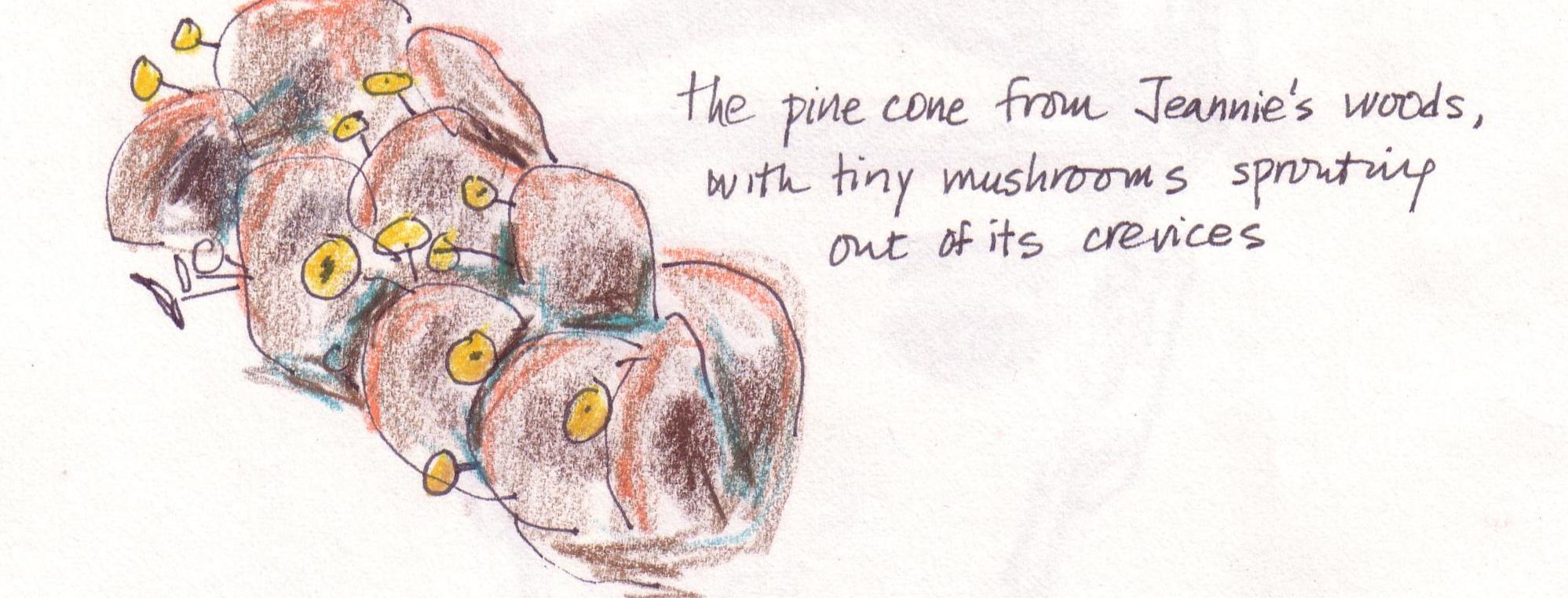
pinecone with mushrooms croppedWhen Julie Olsen, having seen me in the hall with a student, asked what was going on, she wasn’t looking for a chance to commiserate about those awful kids we were stuck with. If she knew the child, she always helped me see the world of the classroom from that child’s point of view. If she didn’t know the child, she asked questions that would help organize whatever I’d been able to observe. She laughed her wonderful raucous laugh with a particular twist that acknowledged the profound challenge of teaching—but it was never a laugh at a kid’s expense.

The colleagues I’ve named taught near me, literally or in the sequence of the school’s groupings, for many years. Others, not named here, taught older or younger children in other corners of the school, and helped me understand where my students were coming from, and where they were headed.

We supported each other by honoring each others’ efforts to know each child; by holding firm, together, on the issue of class size, so that knowing the individual child was possible; and by understanding, always, for each other, that all our hearts were doing hard work.

Last but never least, in moments grabbed from the ongoing intensity of our lives, we cheered each other on by sharing our euphoria about progress. I could not have asked for more.

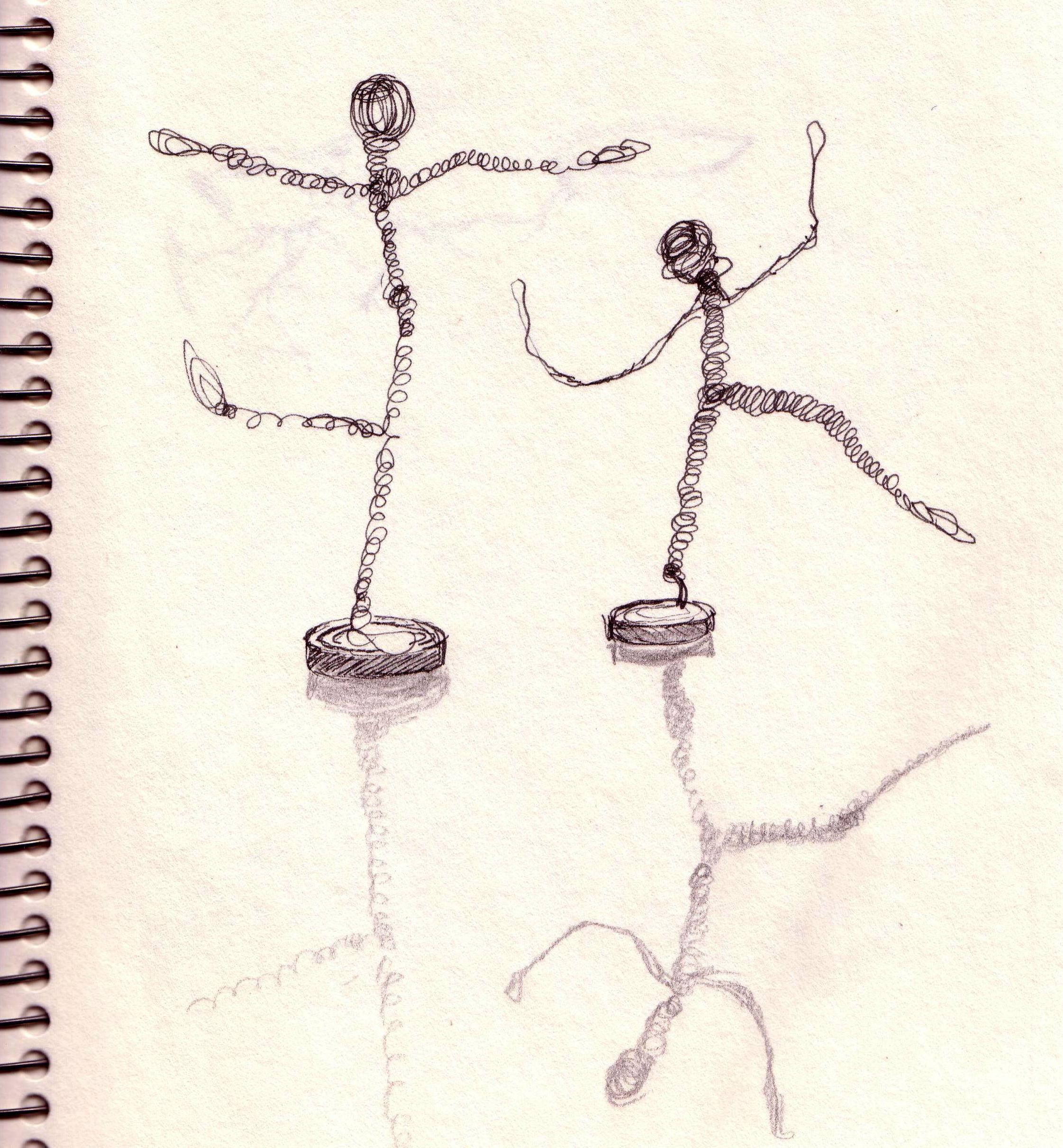
wire sculptures narrowerThe sketches are in thanks and praise for another teacher, Marjorie Weed, who came to volunteer at Touchstone after a long career as a public high school art teacher. She helped me encourage my students as creators and composers, by working with them herself, while I watched and learned along. Mrs. Weed inspired me to give kids time for sketching during our settling time, almost every morning. I was her “oldest and most improved student,” one of many who still value her influence.

Losing and Keeping Dana

On a mid-November night in 1992, I received a phone call from Dick Zajchowski, the Head of my school. One of my students, Dana, ten years old, had been hit by a van while crossing a busy road through that wet and foggy night. She was badly hurt; she had been taken by helicopter to the teaching hospital nearby; nobody knew whether she could recover.

Dana lasted about ten days, in a coma from which she never emerged, although there were times when she seemed to lift, and our hopes lifted. When I visited and sat with her, reading aloud to her some of the book we were sharing in class, I watched the traces on the machines attached to her body. The electronic lines jumped up and down whenever she heard my voice. Was that good? Was that bad?

I had taught Dana for only a few months, but I had known her in the school community since she was very small. Her older sister, Megan, was also in my class.  Dana, so vivid, so full of life, full of opinions, full of energy—how could she not survive?

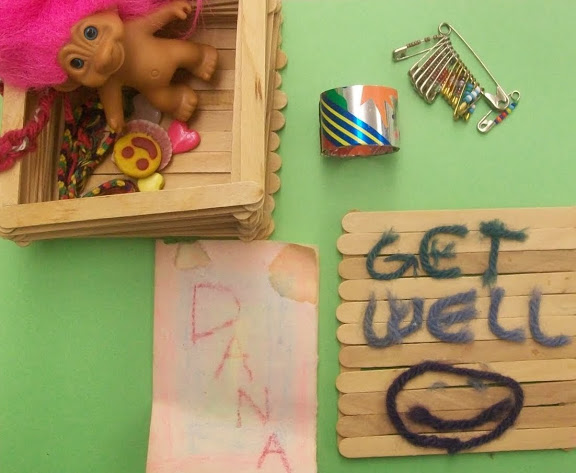
treasures for DanaWhen I cleaned out my desk this spring, I found the small box made of popsicle sticks, full of tiny things kids wanted me to take to Dana in the hospital when—we held on, so hard, to the idea of ‟when”—she woke up: braided wristbands, a tiny troll with long magenta hair, small folded notes.

IMG_20130815_100624 - Copy-001But the injury to her brain was too severe. Here’s one of the hardest things I’ve ever done as a teacher: calling the families of my students, family by family, to tell them that all of us working and wishing, all of us folding small paper origami cranes, hoping to save Dana–all of us had to let all that go. She had gone from us.

Dana and Megan’s parents knew immediately that they would need to find counseling to help Megan. Some of her healing happened out of our sight, though with all of our thoughts and prayers.

Meanwhile, a wonderful grief counselor visited the school to help the faculty help the other kids. Wisely, Dick Zajchowski arranged for Maria, the grief counselor, to come into my own class to work with us directly. She talked us through the stages of grief as she had come to understand them.

  • First, we each needed just to tell our individual versions of how it had happened, or how the news had happened to each of us.
  • Then we needed to confess and work through the universal inclination to blame ourselves, irrationally.
  • We needed to share memories and images of Dana, as she lived.
  • Finally we needed to share our ideas about ways we would carry her forward.

It was true: every single child needed to tell both how he or she imagined the event of the accident, and how his or her parent had relayed the news. One child wished he’d told Dana that the movie she was going to see was a waste of time; if he had, she wouldn’t have been crossing that street. I myself had thought, ‟If only I’d assigned more homework that night…” But when I said that out loud, one of the students said, ‟No, that wouldn’t have stopped her…” All of us worked together to face the truth: this was something we couldn’t have controlled, and didn’t.

One child felt Dana’s death as a blow to his own body. He became physically ill whenever we talked about her in any way, and several times had to go home. Still, it was important for us to talk about Dana, not too much, but enough. We couldn’t just dodge what had happened. I struggled to find the right balance.

One girl, Kerry, seemed to have no defense, no delaying numbness, no way to hide from the events or her feelings about them. Again and again, even when we were doing something with no direct relation to Dana’s death, Kerry broke down and cried. But she was touchingly brave in facing and experiencing those feelings and letting them be, crying and then recovering, moving forward. Each time, I felt her carry the rest of us with her.

Whatever we felt, and however we felt it or expressed it, each of us was a resource to the others.

Months went by. I had known enough of other griefs to recognize, in myself, the feeling of trying to walk underwater; a deep weariness. Maria, the grief counselor, had told me to expect some regression from the kids: neediness, crabbiness, helplessness. All that happened. No way out but through.

At home, I worked on a poem based on Maria’s four stages of grief. That helped me move forward, in the way Kerry’s tears had helped her. In school, off and on, I worked with individual kids to write their own letters to Dana, or short accounts of what had happened.

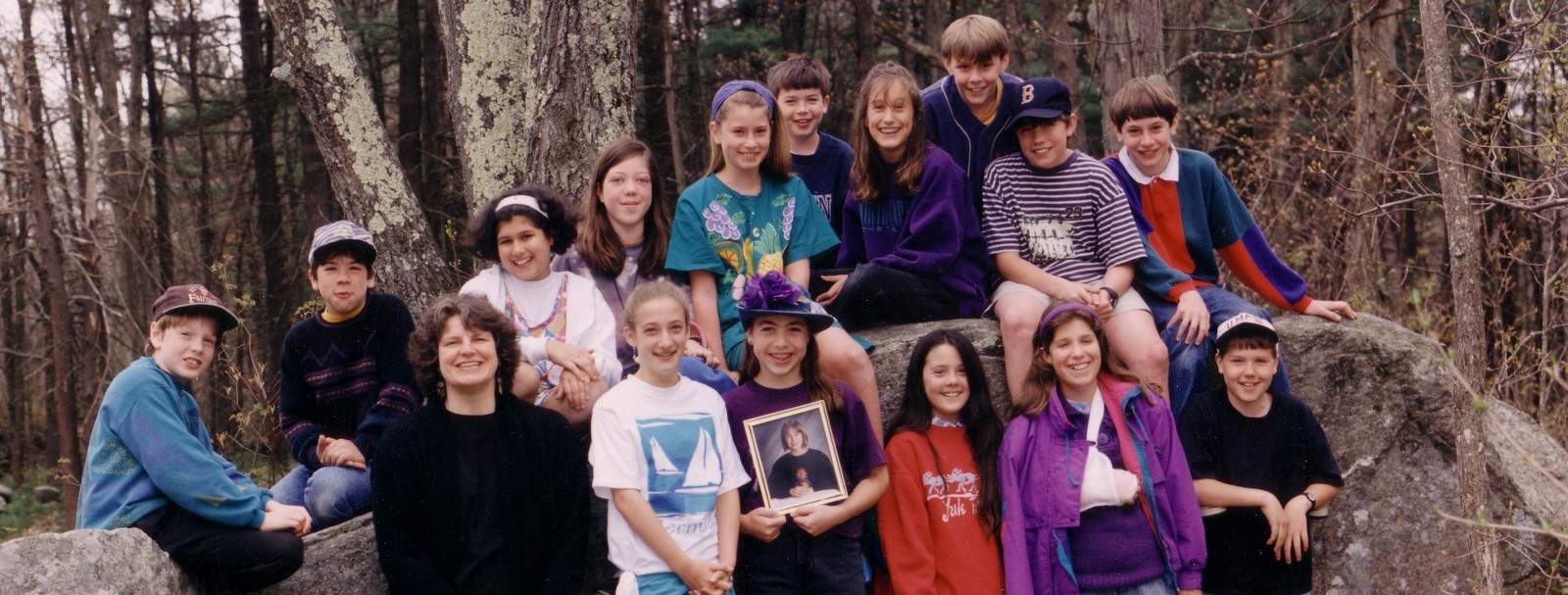
When our class picture was taken, one of the girls held a photo of Dana.

blog photos

Late that spring, Dick asked me to lead the rest of the faculty in writing through that same sequence of parts, the stages of grief, which Maria had explained to us and which I had used in my own poem. Like so much about that whole chapter in my teaching, the memory of my colleagues, crying as they wrote, will never leave me–and I will always be grateful to Dick for discerning, step by step, how our mutual caring could help each of us.

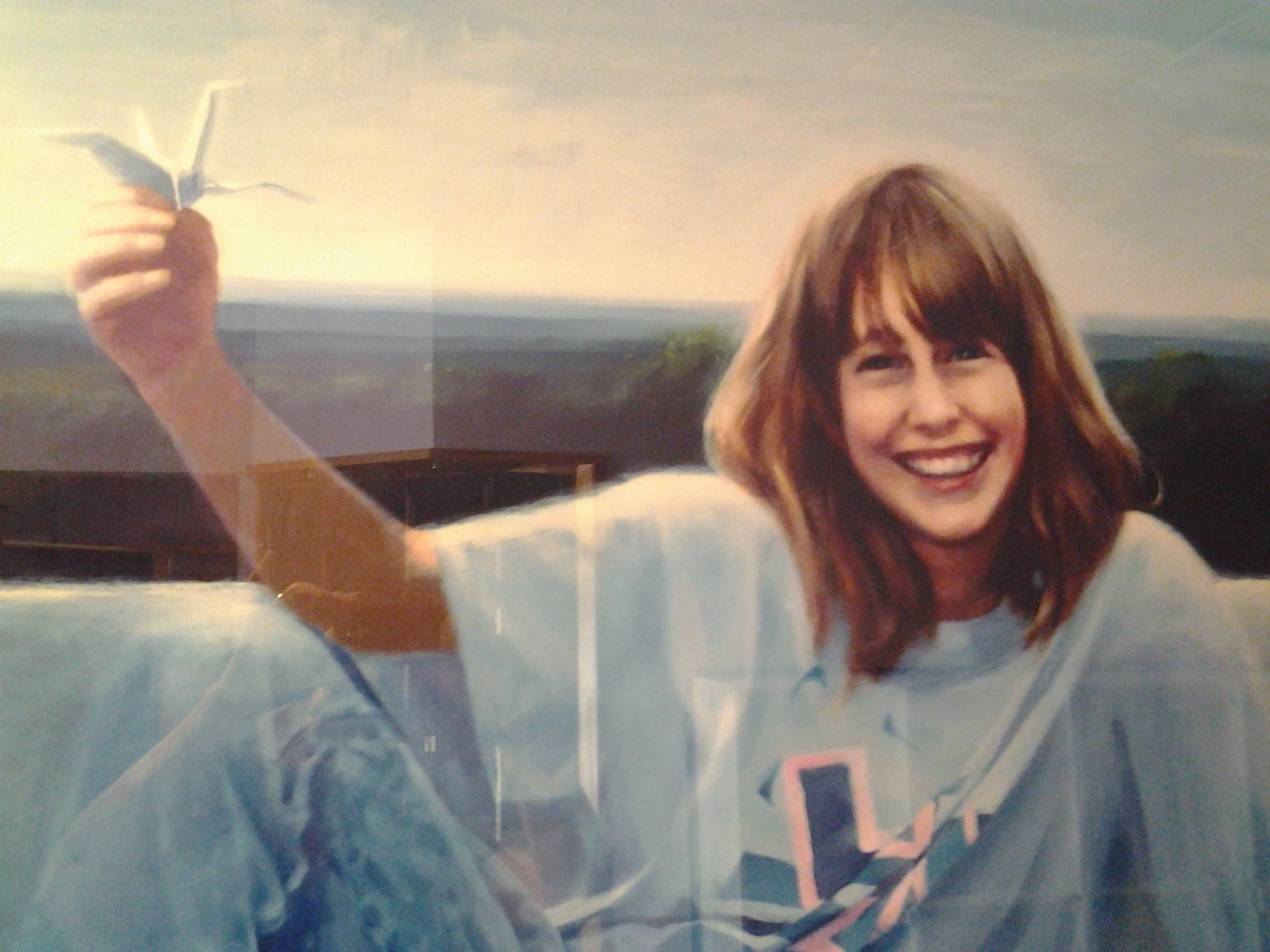
Over the next year, in Dana’s memory, her parents and many of their friends donated the seed money for a new wing to our school. On the wall in that hallway, a painting shows her grinning her inimitable grin, holding one of the cranes we had folded in hope for her. IMG_20130815_100624

Maria, the grief counselor, said that the children who’d been close to Dana could not truly process their shock and loss right away. At ten, or even at twelve, they were too young. ‟Every transition they make,” she said, ‟they will come back to process it again. With any luck they’ll stay in touch with each other, and do some of that together.”

In fact, many of those students have stayed in touch. Many of them, including both Megan and Kerry, are my own Facebook friends. In a way especially needed, somehow, I treasure every smiling photograph they post.

a year to think it over

About ten years ago, my teaching partner and I were forced to look back at a big joint project. (Our grant required a lot of summary writing, to be posted on the organization’s website.) Six months after our giant thematic exploration ended, we went back to reconsider students’ writing and models and illustrations, and our own plans.

Looking out my kitchen window during a break in our work, Kate Keller said, ‟What if we always taught for one year, and then had a year to think it over?”

We did, of course, think as we went along. If we hadn’t engaged in ongoing reflection—grabbed chances for that out of the hurly-burly of teacher life—our teaching would have withered, our students suffered.

Still, what extra dimensions did it give Kate and me, to look back after a good-sized chunk of teaching was actually over? So many things:

  •  When we no longer needed to evaluate each child individually, we got a really clear picture of their work together, as collaborators—especially the ways they had taught each other. And us—the ways they had taught us.
  •  We got a clearer picture of some ways our students had struggled with the theme. Parts of our thematic study of transportation had asked students to consider their own transportation choices, and the impact of different choices on the environment and on other people. One student said, ‟I’m never getting into a car again,” as we walked down a Boston street after hearing a presentation by Stephanie Pollack, from the Conservation Law Foundation. At the time, we weren’t sure whether to laugh or cry. Later, looking back, we remembered a follow-up discussion about all the reasons why a person might not be able to make the ideal environmental choice, and valued, even more than at the time, what kids said to each other in that conversation.

We were critical; but we were also proud. We looked at the study whole, and saw that it was good.

Now, by Kate’s plan, I’m due about 25 years ‟to think it over.”

I’ve left my full time teaching gig. I’ve walked away with binders full of lesson plans and observation notes, boxes full of copies of kids’ work, folders full of communication to kids and parents, and from them.

I’ve brought it all to a barn in Maine, a place where I can open the back doors and look out at a wide meadow and a long pond. It’s a barn very full, already, with family treasures, so I have to compress this new pile radically.

barn back view try 4

As I stare at the meadow, listen to the crows, and sort (radically),  I’ll see what there is to think about. Already, for the posts I have in process, I’ve called people, written emails, asked questions.  Others’ responses have reminded me of additional topics I want to explore and reconsider–and of everything I’ve loved about teaching! What will find its way into actual posts? Time will tell.

Somehow, though, I am sure that looking back–carefully, thoughtfully, mercifully– will be a good way to start looking forward.

I’m so curious to know, if you’ve gotten this far, read this much: how do you reflect on your own learning and practice and profession, whatever they may be? What does it give you to do so?